Keynote Speakers
Table of Contents
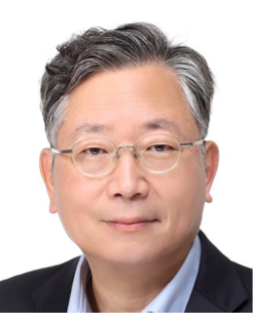
Chang D. Yoo
Thaicom Public Company Limited
Chang D. Yoo is a Professor in the School of Electrical Engineering and the Department of Computer Science at the Korea Advanced Institute of Science and Technology (KAIST). Since joining KAIST in 1999, he has been a leading contributor to the fields of Generative AI, Multimodal Foundation Models, Physical AI, Robotics, and Agentic Intelligence. His research spans diffusion-based generative models, continual learning, reinforcement learning, trustworthy AI, and embodied agents capable of interacting with complex real-world environments. Prof. Yoo has played a key role in advancing agentic and physical AI systems that bridge perception, reasoning, and autonomous action. He has served in major international leadership roles, including Local Chair of ICML 2026, and Area Chair for top-tier conferences such as ICCV, ECCV, and ICASSP. He has also been an Associate Editor for several IEEE Transactions journals and has held important administrative positions at KAIST, including Dean of International Relations and Dean of Special Projects. Prof. Yoo actively collaborates with industry and national research initiatives, including partnerships with Samsung Research and large-scale projects supported by NRF and MSIT. He is a Senior Member of IEEE and has received multiple honors for excellence in research, education, and professional service. He received his B.S. degree from the California Institute of Technology, his M.S. degree from Cornell University, and his Ph.D. degree in Electrical Engineering from the Massachusetts Institute of Technology (MIT).
The Agentic Shift: From Passive Models to Autonomous Actors
Abstract
The emergence of Agentic Artificial Intelligence marks a watershed moment in the evolution of AI—a fundamental transition from models that merely perceive and predict to autonomous agents that reason, plan, and act. Unlike traditional AI pipelines restricted by fixed supervision and static outputs, agentic AI integrates foundation models, multimodal understanding, and reinforcement learning with sophisticated tool-use capabilities. This allows systems to navigate complex tasks within dynamic, real-world environments. This shift is propelled by synergistic advances in Large Language Models (LLMs), diffusion-based generative models, and embodied intelligence. These technologies enable AI agents to interface seamlessly with human users, digital infrastructures, and physical systems. The potential applications are vast, spanning robotics, scientific discovery, healthcare, and cyber-physical automation. By offering unprecedented scalability and adaptability, Agentic AI serves as the bedrock for the next generation of Physical AI. However, this transition from "passive" to "actor" introduces significant technical and ethical risks. Autonomous decision-making complicates the landscape of reliability, alignment, and accountability. Because agentic systems operate through recursive actions, they may amplify errors or exhibit unpredictable behaviors in open-world settings, creating novel vulnerabilities in security-sensitive domains. Achieving trustworthy deployment necessitates breakthroughs in robust learning, causal reasoning, and ethical governance. This talk explores the transformative opportunities of this agentic era while critically examining the research directions required to build resilient, human-aligned, and responsible autonomous systems.
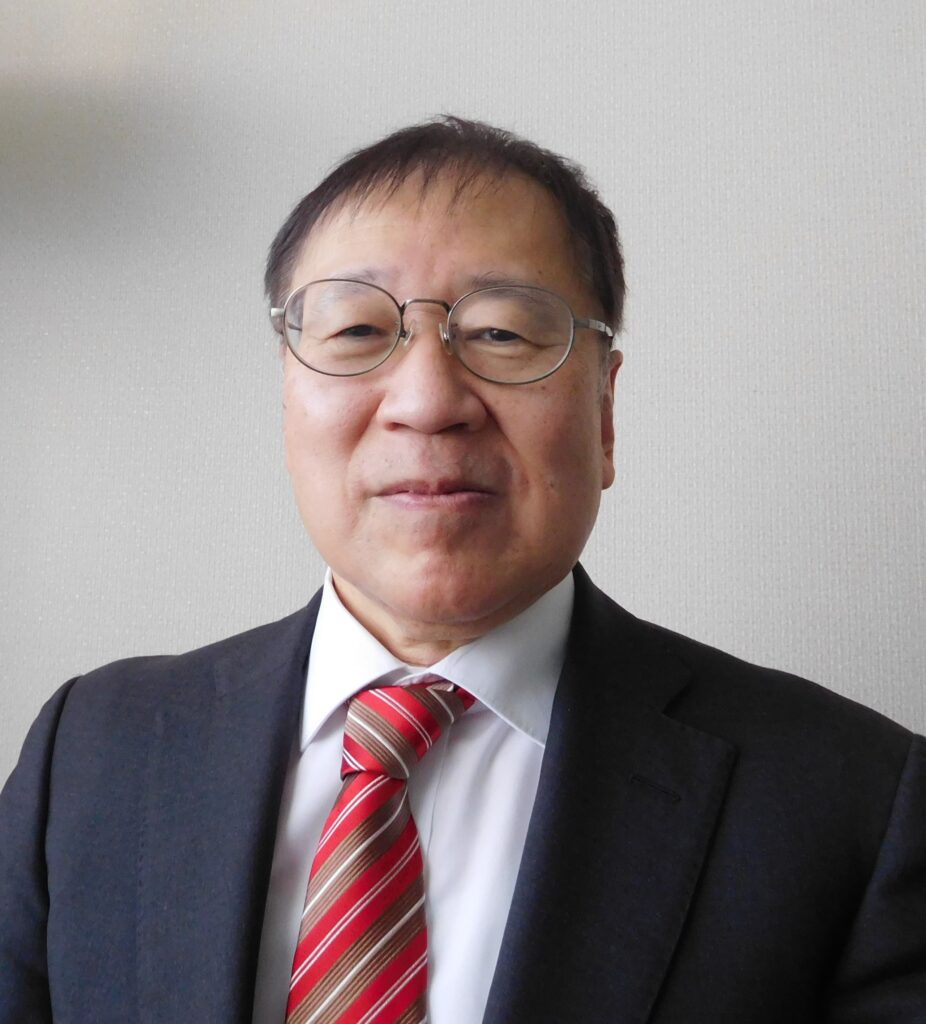
Hideaki Okazaki
Thaicom Public Company Limited
Hideaki Okazaki is a Professor in the Department of Informatics, Faculty of Informatics, and in the Graduate School of Engineering at Shonan Institute of Technology (SIT), Japan. His research focuses on electronic information and communication engineering, particularly nonlinear dynamical systems, piecewise-linear modeling, bifurcation analysis, computer-assisted proof, power-line communication, and quantum scientific computing. He has served as Director of the Research Center for Quantum Computing and the Internet of Things-Inspired Interdisciplinary Research Center since 2021 and 2019, respectively. Since 2024, he has run the SIT (Okazaki & Nakashige Lab.) at the Yokosuka Center for Industrial, Academic, and Governmental Exchange in the Yokosuka Research Park Center No. 1 Building, Kanagawa, Japan.
Prof. Okazaki has established an original methodology for analyzing complex nonlinear phenomena through piecewise-linear approximation and dynamical systems theory, converting them into mathematically rigorous and computationally verifiable problems. His achievements include United States-patented CDMA-based power-line communication systems; analysis of Hopf, period-doubling, homoclinic, canard, and mixed-mode oscillation phenomena; and rigorous verification of nonlinear circuits using interval arithmetic. Recently, he has expanded this framework to quantum computing, including quantum-circuit-based function approximation, quantum differential equation solvers, and quantum teleportation circuits.
He has actively contributed to IEICE, IEEE ISCAS, IEEE MWSCAS, and IEEE APCCAS, and has served as Chair of the IEICE Technical Committee on Circuits and Systems, Vice President of the IEICE Engineering Sciences Society, and session chair for international conferences on Circuits and Systems. He received his B.S., M.S., and Ph.D. degrees in Engineering from Waseda University.
A Mathematical Model Including a Typed Higher-Order Logic Model for Updating Prompts of Generative AI, Its Applications, and an Academic Patent Strategy
Abstract
The rapid advancement of Generative Artificial Intelligence has created new opportunities to design prompts as logically structured, mathematically analyzable, and practically deployable control mechanisms. This talk presents a mathematical model for updating prompts of Generative AI, integrating a Typed Higher-Order Logic (Typed HOL) model, practical applications, and an academic patent strategy.
Typed HOL, rooted in Church’s type theory, allows predicates and functions to be treated as variables while assigning explicit types to terms, predicates, and logical structures. By representing a Goal Seek Prompt in Typed HOL format, prompt design can be transformed from empirical trial and error into a formal reasoning framework supporting clarity, consistency, and explainability.
The proposed framework also formalizes interactive prompt updating as an iterative process in a high-dimensional embedding space. Prompts and AI-generated responses are represented as vectors, and the updating process is modeled using an evaluation function and iterative mapping.
Under suitable mathematical conditions, including contraction-like properties, the process can converge stably toward a target direction, reducing output fluctuation and improving stability. The talk further explores applications in goal-oriented evaluation and safety-critical domains such as construction sites, factories, and logistics facilities. Finally, it discusses Japanese patent applications related to Typed HOL-based risk evaluation, safety judgment, and countermeasure generation.
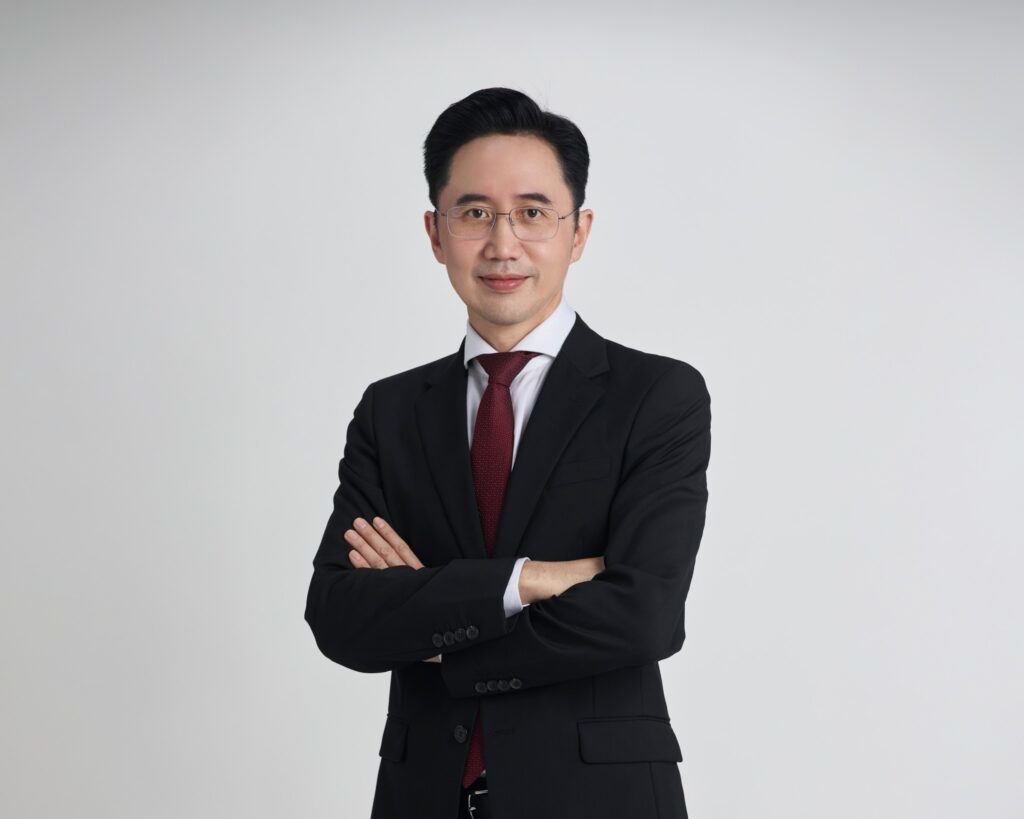
Yodchanan Wongsawat
Thaicom Public Company Limited
Prof. Dr. Yodchanan Wongsawat earned his Bachelor of Engineering (B.Eng.) in Electrical Engineering in 2002 from the Sirindhorn International Institute of Technology (SIIT) at Thammasat University in Thailand. He then obtained a Master of Science (M.S.) in Electrical Engineering in 2003 and a Doctor of Philosophy (Ph.D.) in Electrical Engineering in 2007, both from the University of Texas at Arlington, USA.
In 2025, he was promoted to the rank of full professor in Biomedical Engineering, following years of highly cited research. Prof. Dr. Yodchanan Wongsawat is a prominent Thai academic, biomedical engineer, and politician. He uniquely combines an extensive background in advanced science with strong political connections. On March 30, 2026, he took office as Deputy Prime Minister and Minister of Higher Education, Science, Research, and Innovation (MHESI).
Before stepping fully into the political arena, Dr. Yodchanan Wongsawat developed a respected career in academia and cutting-edge engineering, specializing in brain-computer interfaces (BCI), neuro-engineering, and medical devices.
Thai Researchers on the Global Stage: Perspectives, Opportunities, and Strategic Expectations
Abstract
As advanced technologies in circuits, systems, communications, and artificial intelligence reshape our interconnected world, Thailand is pioneering a transformative paradigm to elevate its research community onto the global stage. Delivered by the Ministry of Higher Education, Science, Research and Innovation (MHESI), this keynote address outlines Thailand's strategic vision anchored on a "Triple-I" framework: Inspire, Integrate, and Impact.
First, we must INSPIRE the next generation, establishing a vibrant stage for young researchers to innovate fearlessly in emerging tech sectors. Second, we must INTEGRATE the entire talent pipeline. Breakthroughs do not happen in silos; thus, Thailand is breaking traditional boundaries to unify high schools, universities, and deep-tech industries into a cohesive, collaborative ecosystem. This integration ensures that foundational STEM education seamlessly translates into scalable industrial applications, particularly in AI, semiconductor design, and smart systems. Finally, our ultimate goal is to create a global IMPACT. Thailand’s expectations for its researchers extend beyond academic publications; we aim to solve real-world challenges, from digital equity to sustainable automation, ensuring that global observers recognize Thai innovation not just as adaptive, but as pioneering.
By leveraging international platforms like ITC-CSCC 2026, Thailand invites global counterparts to co-create this future, fostering borderless knowledge exchange and positioning Thai researchers as vital, recognized contributors to the global technological advancement.