Keynote Speakers
Table of Contents
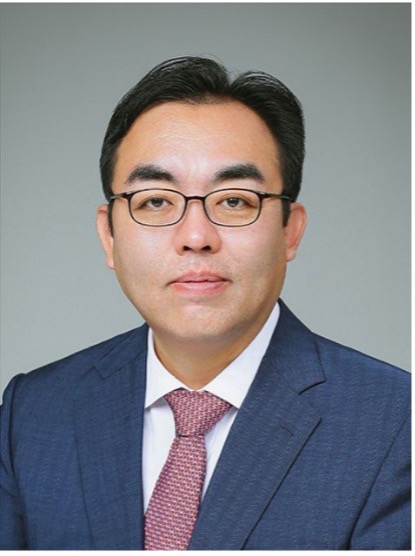
Prof. Seongjae Cho
Thaicom Public Company Limited
Prof. Seongjae Cho received B.S. and Ph.D. degrees in electrical engineering, from Seoul National University, in 2004 and 2010, respectively. He worked as an Exchange Researcher at AIST, Tsukuba, Japan, in 2009, Postdoctoral Researcher at Seoul National University in 2010, and at Stanford University, CA, USA, from 2010 to 2013. He joined Gachon University as a faculty member in 2013 and worked until 2023. Prof. Cho is currently with the Department of Semiconductor Engineering and Institute of Multiscale Matter and Systems (IMMS) at Ewha Womans University. His research interest includes semiconductor memory devices, low-power transistors, group-IV optical interconnect devices, and future computing technologies. He has published more than 230 journal papers, 400 conference papers, and holds 52 Korean and U.S. patents. Prof. Cho is the Recipient of the Minister’s` Award from the Ministry of Science and ICT (MSIT) in 2021 for his contributions in the field of nanoscale semiconductor devices and ultra-small integrated processing.
Recent Advances in Capacitorless DRAM Technology towards Logic Compatibility
Abstract
The concept of one-transistor DRAM (1T DRAM), or capacitorless DRAM, emerged in the early 1990‘s when floating-body (FB) silicon-on-insulator (SOI) MOSFETs were shown to store charge directly inside the transistor. Subsequent studies introduced thin-body channels, tunneling-based programming, and leakage-assisted schemes to improve write efficiency and sensing margin. However, relatively weak data retention – especially at elevated temperature – remained the dominant limitation. In this talk, recent works emphasizing retention-focused design are introduced. SiGe quantum wells exploit band offsets to confine holes, while the band-engineered source/drain structures suppress thermal loss. Double-gate, tri-gate, and gate-all-around (GAA) geometries are also being explored to improve electrostatic controllability and logic compatibility. Since 1T DRAM is better suited to embedded rather than standalone memory, it has the potential to reshape parts of the memory industry. As system technologies advance rapidly in Korea, this may be an opportune moment to pursue 1T DRAM in parallel with conventional DRAM technologies.
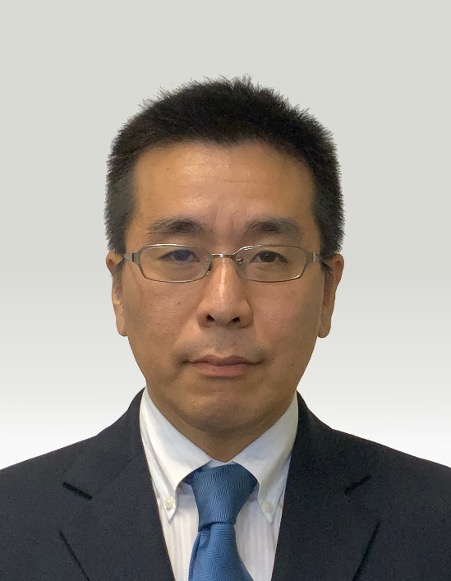
Kazutoshi Sakakibara
Thaicom Public Company Limited
Kazutoshi Sakakibara received his PhD in Engineering from Kobe University in 2004. He was an assistant professor from 2004 to 2008, a lecturer from 2008 to 2013 at Ritsumeikan University, and an associate professor from 2013 to 2024 at Toyama Prefectural University. He is currently a professor in the Faculty of Information Engineering at Toyama Prefectural University. From 2020 to 2025, he held a concurrent appointment as a cross-appointment researcher at the Innovation Laboratory of Hokuriku Electric Power Company, advising on new development projects and research in the electric power business. His present research interests include systems modeling, emergent systems, and the development and application of optimization and machine learning algorithms. He has conducted collaborative research with more than 40 companies and local governments, with research applications spanning a wide range of fields including electricity, steel production, textile processing, logistics, transportation, tourism, retail, air conditioning, biotechnology, urban design, and evacuation planning. He is a member of SICE, ISCIE, SSJ, ISIJ, JSBA and IEEJ in Japan.
Hybrid Approaches to Mathematical Programming and Metaheuristics for Large-Scale and Highly Constrained Optimization Problems
Abstract
With the continuous improvement of computational performance, the range of practical applications of mathematical programming has been steadily expanding. One of the major advantages of mathematical programming is its ability to derive feasible solutions that satisfy all constraints for realistic problems involving a wide variety of conditions, provided that these constraints can be formulated as linear expressions. However, for problems of realistic scale, computational complexity inevitably becomes a critical issue. On the other hand, metaheuristics such as genetic algorithms exhibit high scalability in terms of computational cost, but they do not explicitly guarantee feasibility. Therefore, additional mechanisms—such as neighborhood design or the introduction of penalty functions—are required to handle constraints effectively. Given these complementary characteristics, various approaches can be considered to hybridize mathematical programming and metaheuristics at the algorithm design stage. In this presentation, we introduce several hybrid solution methods that the speaker has developed for production scheduling problems, and discuss the underlying ideas and future potential of such hybrid approaches.
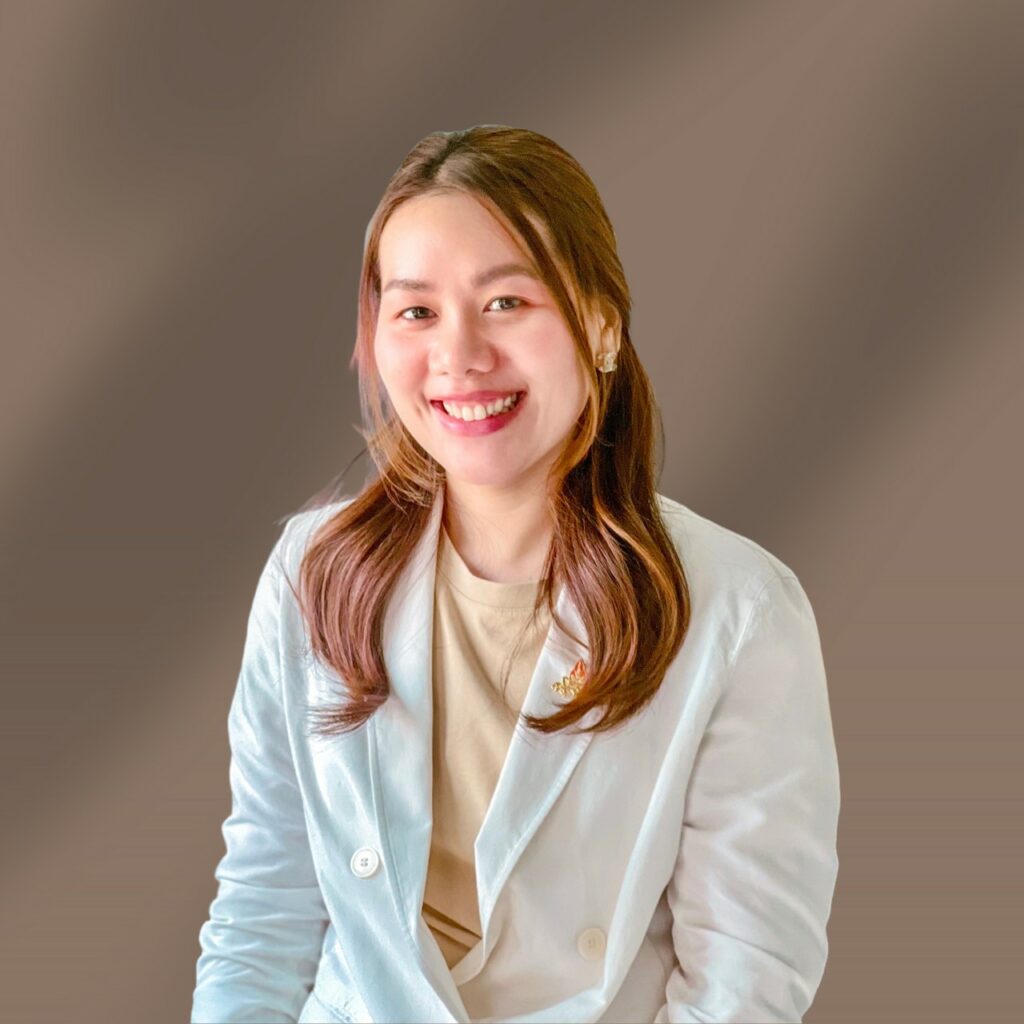
Assoc. Prof. Dr. Chayada Surawanitkun
Thaicom Public Company Limited
Assoc. Prof. Dr. Chayada Surawanitkun received the B.Eng. (First Class Honors) and Ph.D. degrees in Electrical Engineering from Khon Kaen University, Thailand, in 2009 and 2013, respectively. She has been a faculty member at Khon Kaen University since 2013 and currently serves as a lecturer and Program Chair for the Master’s and Ph.D. programs in Electrical and Computer Engineering at the Faculty of Interdisciplinary Studies, Nong Khai Campus, Khon Kaen University. Her research interests span data storage technology, spin-transfer torque magnetic random-access memory (STT-RAM), nano-device thermal analysis, electromagnetic compatibility, and energy systems, including renewable and sustainable energy. She has published extensively in international journals and conferences and has led multiple nationally funded research projects. Beyond academia, she is actively engaged in industry collaboration as a consultant, speaker, and innovation expert in areas such as digital transformation, business development, design thinking, and community-based entrepreneurship, reflecting a strong commitment to bridging engineering research with real-world impact.
Electrical Engineering Innovation for Sustainable and Intelligent Society
Abstract
The rapid advances in digital technologies have led electrical engineering to expand its scope from traditional, domain-specific studies toward more integrated, application-oriented research. One of the key strengths of electrical engineering lies in its ability to model, analyze, and optimize complex physical and technological systems, particularly when supported by computer-based simulation techniques across multiple scales. However, as real-world problems become increasingly complex and multidisciplinary, relying solely on single-domain approaches is no longer sufficient. On the other hand, emerging technologies such as artificial intelligence, smart sensing, and renewable energy systems offer high potential for scalability and adaptability yet often require integration with fundamental engineering principles to ensure reliability and practical feasibility. Given these complementary characteristics, there is a growing need to bridge deep technological knowledge—such as applied nanotechnology and energy systems—with intelligent and societal-level applications. This led to the introduction of an interdisciplinary research framework that integrates nanoscale device engineering, sustainable energy systems, and AI-driven analytics, and discusses how this approach can contribute to the development of smart technologies and address complex challenges in modern society.